Where This Fear Actually Comes From
Most of us don’t dislike math. We dislike how we experienced it.
Timed exams.
Memorizing formulas without context.
Getting the “right answer” under pressure.
Somewhere along the way, math stopped feeling like a tool and started feeling like a test of intelligence.
So when you hear “data science,” your brain goes back to that version of math - the stressful, rigid, high-pressure one.
But data science doesn’t work like that.
What Data Science Really Demands
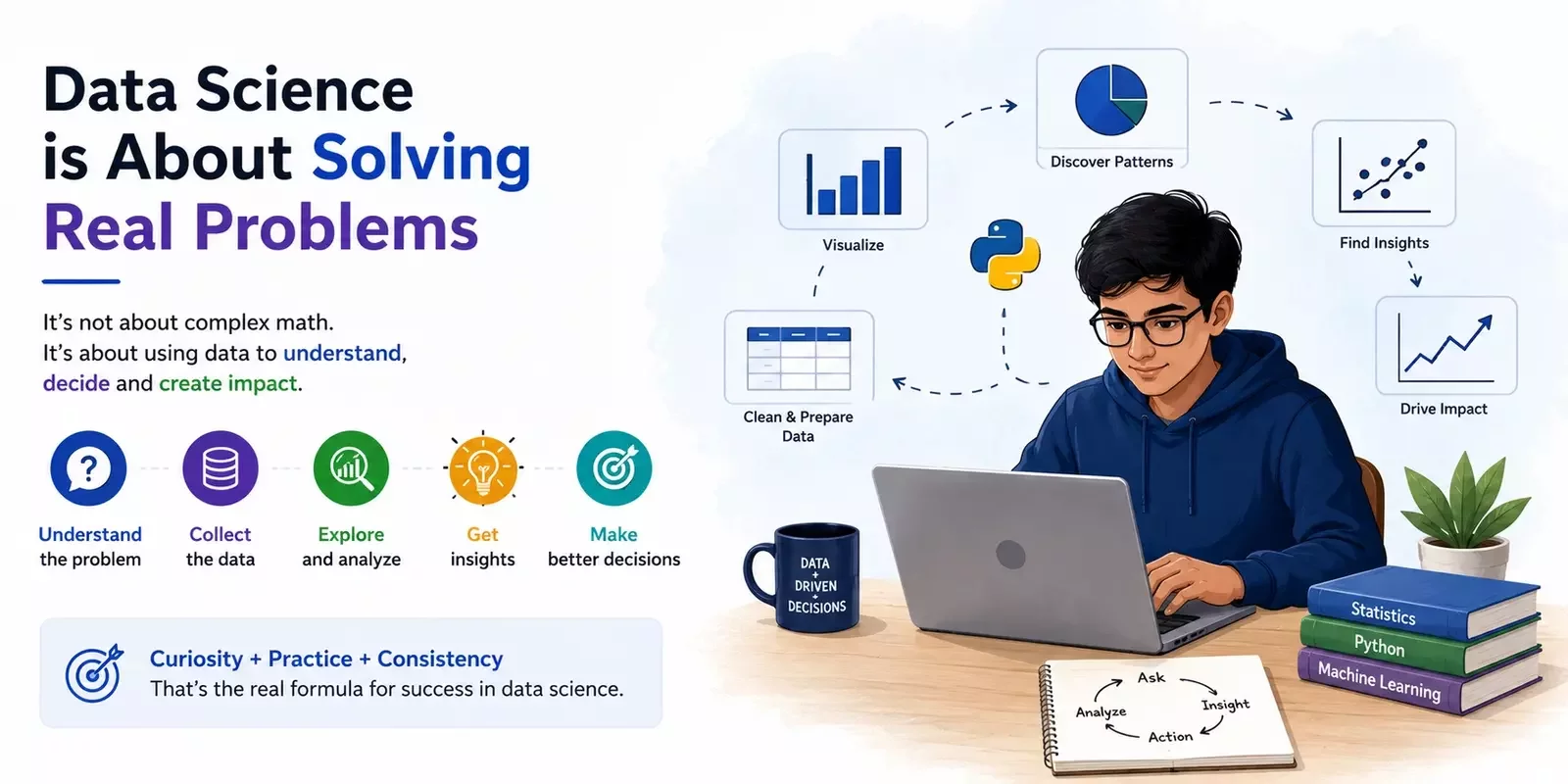
At its core, data science is not about solving equations on a whiteboard.
It’s about:
Asking the right questions
Understanding patterns
Making sense of messy, real-world data
Communicating insights clearly
Yes, math exists in the background. But most of the time, you’re not deriving formulas from scratch.
You’re using tools that already handle the heavy lifting - libraries, frameworks, and platforms that are built to simplify complex computations.
What matters more is whether you can think logically and stay curious.
The Kind of Math You Actually Need
Let’s make this practical.
You don’t need advanced theoretical math to get started. What you do need is a working understanding of concepts like:
Basic statistics (mean, median, standard deviation)
Probability fundamentals
Interpreting trends and distributions
Understanding relationships between variables
That’s it.
And even these are not the things you need to master before you begin. You learn them as you go, in context, while working on real problems.
Because math makes a lot more sense when you see why you’re using it.
Tools Do More Than You Think
Modern data science tools are designed to reduce complexity, not increase it.
Languages like Python come with libraries that can:
Run statistical models
Visualize data
Train machine learning algorithms
You’re not sitting there calculating everything manually.
Instead, your role is to:
Choose the right approach
Interpret the output
Decide what it actually means
And that’s a very different skill set from solving textbook math problems.
The Real Skill Gap Isn’t Math
If people struggle in data science, it’s rarely because of math.
It’s usually because of:
Not knowing how to approach a problem
Getting overwhelmed by too many tools
Lacking structured guidance
Learning theory without application
In other words,
How to Start (Even If You’re Not Confident Yet)
Start by:
Working on small, real-world datasets
Asking simple questions and exploring answers
Learning concepts only when you need them
Building projects, not just consuming content
Confidence in data science doesn’t come from theory first.
It comes from doing.
What Actually Changes Everything
Where the Right Learning Approach Matters
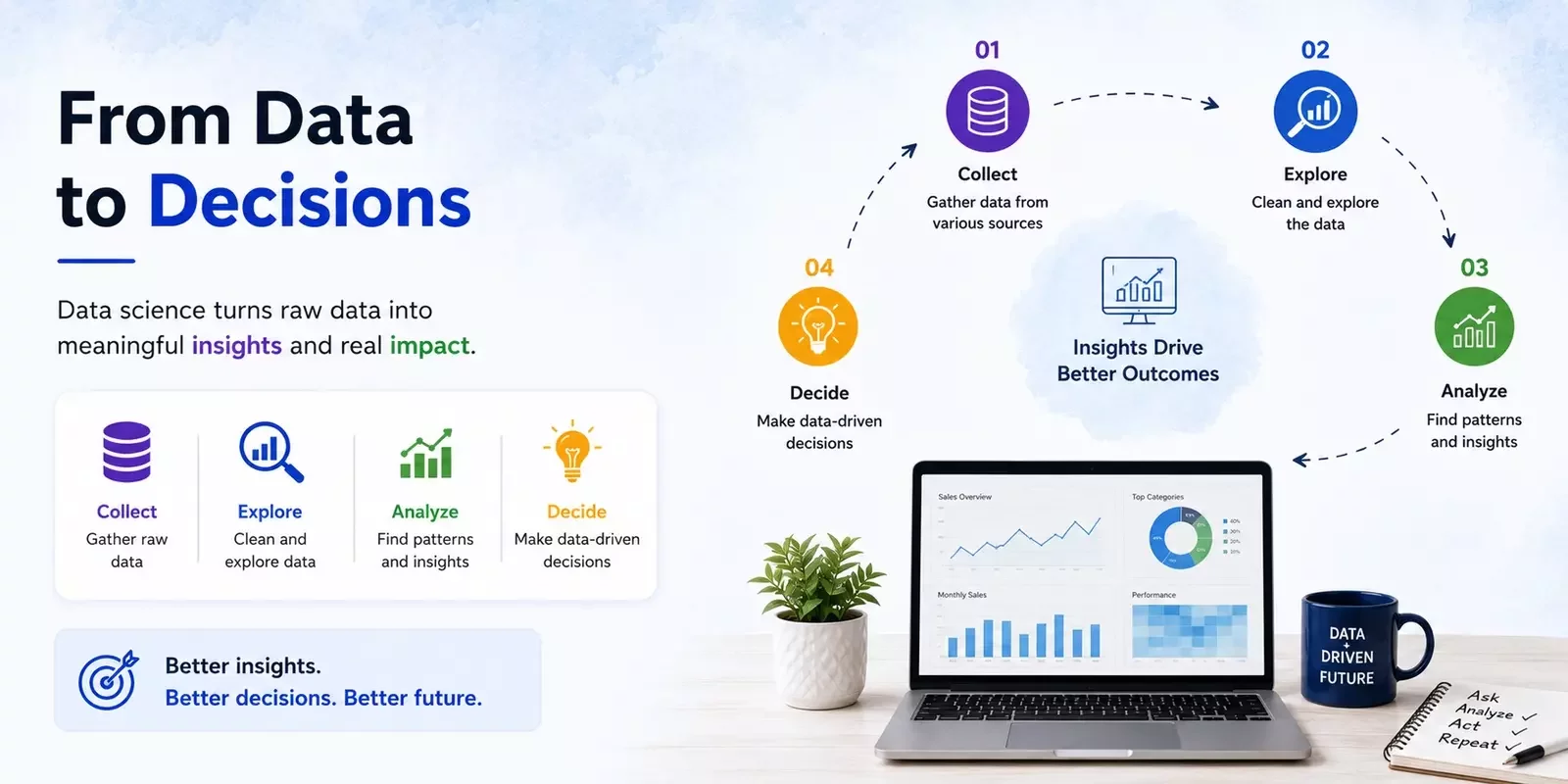
This is exactly why structured, application-focused learning makes such a difference.
At Lectureology Academy, the focus isn’t on overwhelming you with theory or expecting you to already “be good at math.”
Instead, the approach is built around:
Learning by doing
Breaking down concepts into real-world use cases
Guiding you step by step through practical applications
Building confidence through projects, not pressure
Because when you see how concepts actually work in practice, the fear around math starts to fade on its own.
So, Do You Need to Be Good at Math?
No.
You need to be willing to:
Think
Experiment
Stay consistent
Learn as you go