No matter what career you choose, one skill will always remain essential: communication.
Whether you're a student preparing for your first job, a teacher explaining concepts, a software developer collaborating with a team, or a business owner meeting clients, the ability to communicate effectively can influence your success every single day.
Technical knowledge may help you secure a job, but communication skills often determine how well you perform, collaborate, and grow within your profession. In today's fast-paced workplace, the ability to express ideas clearly, listen actively, and build meaningful relationships is just as valuable as expertise in your field.Communication Goes Beyond Speaking
Many people assume communication skills are simply about speaking fluent English or delivering confident presentations. In reality, communication is a combination of speaking, listening, writing, and understanding others.
A good communicator knows how to explain ideas clearly, ask thoughtful questions, write professional messages, and pay attention to what others are saying. They also understand the importance of body language, tone, and empathy. These qualities make interactions more effective and help build stronger personal and professional relationships.Why Every Profession Needs Strong Communication Skills
Regardless of the industry, every role involves working with people. Employees interact with colleagues, managers, customers, clients, and stakeholders on a regular basis. When communication is clear, work flows smoothly, expectations are understood, and problems are resolved more efficiently.
Strong communication skills help professional:
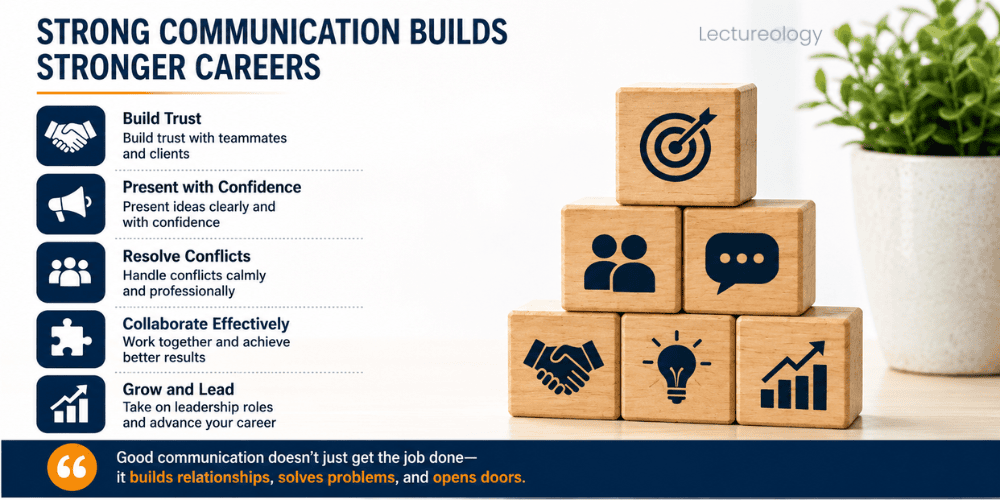
Build trust with teammates and clients
Present ideas with confidence
Handle conflicts professionally
Collaborate effectively on projects
Take on leadership responsibilities
These abilities are valuable in every field, from healthcare and education to technology, finance, marketing, and customer service.
Better Communication Creates Better Teams
Successful teams are built on clear and honest communication. When everyone understands their responsibilities and feels comfortable sharing ideas, collaboration becomes easier and productivity improves.
On the other hand, poor communication can lead to misunderstandings, missed deadlines, and unnecessary stress. A simple conversation or well-written message can often prevent problems before they grow into larger issues.
Organizations value employees who can communicate openly because they contribute to a positive and efficient work environment.Communication Builds Confidence
Many capable individuals hesitate to share their opinions or participate in discussions because they lack confidence. The encouraging part is that confidence develops through practice.
Speaking up during meetings, participating in classroom discussions, and practicing presentations regularly can gradually improve both communication and self-assurance. As confidence grows, people become more comfortable taking on new responsibilities and pursuing leadership opportunities.The Role of Communication in Career Growth
Communication plays a significant role in every stage of a professional journey. During job interviews, it helps candidates make a strong first impression. At work, it allows employees to explain ideas clearly, collaborate with colleagues, and build relationships with clients.
Professionals who communicate effectively are often seen as reliable, approachable, and capable of handling responsibility. As a result, they are more likely to receive promotions, lead projects, and represent their organizations in important situations.Digital Communication Matters Too
The modern workplace relies heavily on emails, video meetings, instant messaging platforms, and collaborative tools. Being able to write concise emails, participate confidently in virtual meetings, and maintain a professional tone has become an essential workplace skill.
Clear digital communication saves time, reduces confusion, and ensures that information reaches the right way.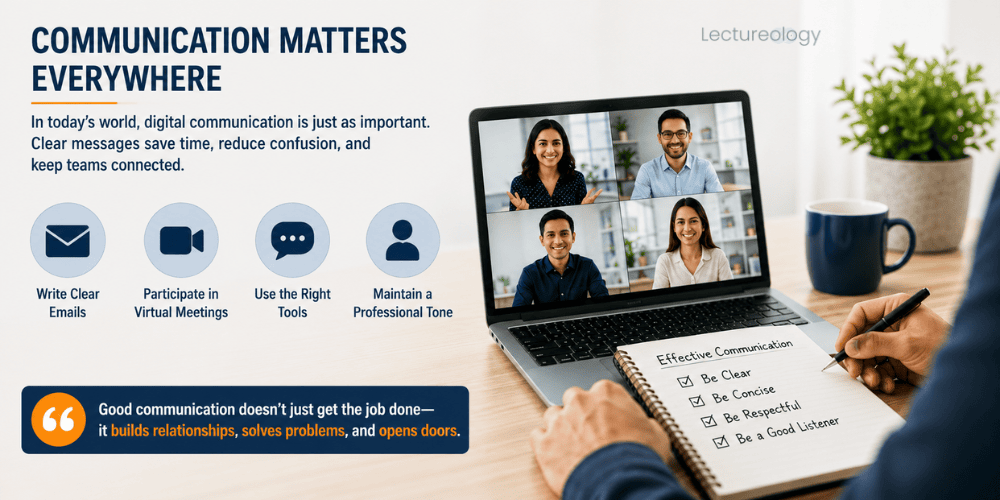
Why Students Should Start Early
Communication skills are not only important after graduation. Students who develop these abilities early find it easier to participate in class, work on group projects, deliver presentations, and prepare for interviews.
Reading regularly, engaging in discussions, practicing spoken English, and seeking constructive feedback are simple habits that contribute to long-improvement. Small efforts made consistently can have a lasting impact on academic performance and future career opportunities.Conclusion
Communication is a skill that supports success in every profession, regardless of experience or industry. It helps people express ideas, solve problems, build relationships, and work effectively with others.
While technical knowledge may open the door to opportunities, communication skills help you make the most of them. Investing time in improving the way you speak, listen, and interact is an investment in your personal and professional growth.
At every stage of life - from the classroom to the workplace - strong communication remains one of the most valuable skills a person can possess.