It’s not just about speaking fluent English. Here’s what employers are actually looking for.
“Good communication skills” is one of the most common phrases you'll see in a job description.
But what does it actually mean?
For students and fresh graduates, communication skills can sometimes feel like a vague requirement. You may think it means speaking fluent English, having a large vocabulary, or being confident enough to talk in front of a crowd.
Those things can help—but professional communication is much broader.
Employers are looking for people who can express ideas clearly, listen carefully, understand others, ask the right questions, and communicate appropriately in different situations.
Here’s what they really mean when they ask for good communication skills.1. Can You Explain Your Ideas Clearly?
You may have a great idea, but if nobody understands it, the idea doesn't go very far.
In the workplace, you'll regularly need to explain tasks, share suggestions, present information, write emails, or update colleagues about your work.
Good communication means getting your point across without making the other person work unnecessarily hard to understand you.
You don't need complicated vocabulary.
You need clarity.
Instead of trying to sound impressive, focus on making your message easy to understand.2. Can You Listen?
Communication isn't just speaking.
Listening is half of the conversation.
Employers want people who pay attention during meetings, understand instructions, ask questions when something is unclear, and respond to what was actually said.
A good listener doesn't simply wait for their turn to speak.
They listen to understand.
This becomes especially important when working with customers, teammates, managers, or people from different backgrounds.3. Can You Ask Good Questions?
Asking questions isn't a sign that you don't know enough.
Often, it's a sign that you're paying attention.
Imagine your manager gives you a task with unclear requirements. Instead of making assumptions and submitting the wrong thing, you ask a few thoughtful questions before starting.
That's good communication.
Learning to ask specific and relevant questions can save time, prevent mistakes, and demonstrate that you're genuinely interested in doing the work correctly.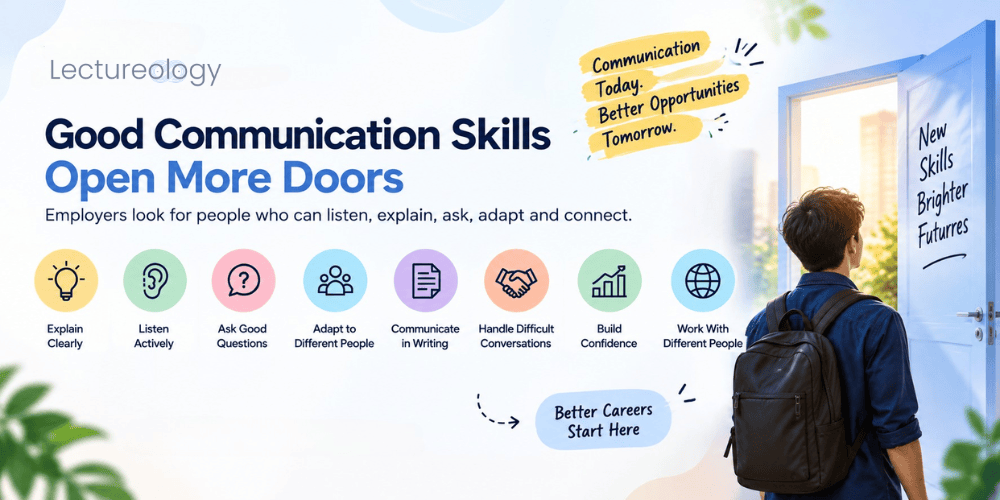
4. Can You Adapt the Way You Communicate?
You don't communicate with everyone in exactly the same way.
The way you speak to a close friend isn't the way you'd write to your manager. A presentation to a group of colleagues requires a different approach from a conversation with a customer.
Good communicators understand their audience.
They know when to be formal, when to be conversational, when to provide more detail, and when to keep things concise.
This ability to adapt is especially valuable in professional environments.5. Can You Communicate in Writing?
Professional communication doesn't happen only in meetings.
Emails, reports, messages, presentations, proposals, and documentation are all part of everyday work.
A well-written message can make you appear organized and professional. A confusing message can create unnecessary misunderstandings.
You don't need to write like a novelist.
You need to know how to structure your thoughts, choose the right tone, and communicate your message clearly.
6. Can You Handle Difficult Conversations?
Workplaces aren't always comfortable.
There will be disagreements, mistakes, misunderstandings, feedback, and situations where people have different opinions.
Good communication means being able to handle these moments respectfully.
Instead of becoming defensive, can you listen to feedback?
Instead of avoiding a problem, can you discuss it?
Instead of blaming someone, can you focus on finding a solution?
These abilities demonstrate emotional maturity and professionalism.7. Can You Communicate With Confidence?
Confidence doesn't mean talking the most in a meeting or having an answer to everything.
It means being comfortable expressing your thoughts and asking questions even when you're nervous.
For a fresh graduate, confidence might mean introducing yourself during an interview, explaining a college project, giving a presentation, or speaking to a senior colleague.
You don't have to become the loudest person in the room.
You simply need to trust that your ideas deserve to be heard.8. Can You Communicate With Different People?
Modern workplaces bring together people with different personalities, cultures, experiences, and working styles.
Being able to communicate effectively with different kinds of people is a valuable professional skill.
It requires patience, empathy, and an ability to avoid making assumptions.
You may not always agree with someone, but you should still be able to work with them.Good Communication Isn't About Perfect English
This is particularly important for students and fresh graduates.
Having an accent, making an occasional grammatical mistake, or not knowing an advanced word doesn't automatically make someone a poor communicator.
Professional communication is about being understood and understanding others.
Improving your language skills can certainly help you communicate more confidently, but don't wait until your English is "perfect" before you start speaking.
Communication improves through practice.How Students Can Build Better Communication Skills
You don't need to wait for your first job to start.
Take part in presentations and group discussions. Join clubs or organizations. Volunteer for projects. Practice writing professional emails. Read regularly. Try explaining complicated topics in simple words.
You can even practice by recording yourself explaining a topic for two minutes and then listening back.
Notice whether you're clear, whether you speak too quickly, and whether your explanation has a logical structure.
Most importantly, have more conversations.
Every conversation is an opportunity to practice listening, explaining, questioning, and understanding.Why Employers Value Communication So Much
Almost every job involves working with people in some way.
You may need to collaborate with a team, communicate with customers, explain ideas to management, coordinate with other departments, or build relationships with clients.
Technical skills can help you complete a task.
Communication skills help you work effectively with the people around you.
That's why employers continue to mention communication in job descriptions across industries.Final Thoughts
When an employer says they want someone with “good communication skills,” they aren't necessarily looking for the person who speaks the most or has perfect English.
They're looking for someone who can listen, understand, explain, ask, adapt, and connect.
And the good news is that communication isn't a talent you're either born with or without.
It is a skill.
You can practice it, improve it, and become more confident over time.
At Lectureology Academy, we believe career preparation goes beyond academic qualifications. Developing strong communication and other workplace-ready skills can help learners approach future opportunities with greater confidence.
Because sometimes, the skill that gets you noticed isn't what you know.
It's how well you can communicate what you know.