
Many parents today want their children to succeed academically while also exploring hobbies, creativity, and personal interests. But balancing both can sometimes be difficult.
Between schoolwork, tuition, exams, extracurricular activities, and screen time, parents often worry their child is doing too much or not enough.
Some fear hobbies may distract children from academics. Others worry that focusing only on studies may lead to stress, burnout, or lack of confidence.
The truth is that academics and hobbies do not have to compete with each other. When balanced properly, hobbies can actually improve a child's academic performance, emotional wellbeing, and overall development.Why Balance Matters
Children need more than textbooks and exams to grow confidently.
Academic learning helps develop knowledge and discipline, while hobbies encourage creativity, communication, problem-solving, and emotional expression. A healthy balance between the two supports overall development and helps children become more confident and well-rounded individuals.
When children are only pressured to focus on grades, they may eventually lose motivation or begin associating learning with stress. On the other hand, too little academic structure can affect consistency and long-term performance.
Balance helps children enjoy learning instead of feeling overwhelmed by it.Hobbies Are Not a Waste of Time
One of the biggest misconceptions parents have is that hobbies distract children from academics.
In reality, hobbies often help children:
Improve focus and concentration
Build confidence
Reduce stress
Develop discipline
Strengthen creativity and communication skills
Activities such as chess, music, reading, art, sports, or public speaking can positively influence academic performance by improving patience, memory, and critical thinking.
Understand Your Child's Interests
Every child learns differently and has different strengths.
Some children enjoy structured academic activities, while others naturally connect with creative or physical hobbies. Instead of forcing children into activities purely based on trends or comparisons, parents should observe what genuinely interests them.
When children enjoy what they are learning, they are more likely to stay committed and confident.
Supporting a child's interests does not mean lowering academic expectations. It simply means recognizing that personal growth also matters alongside grades.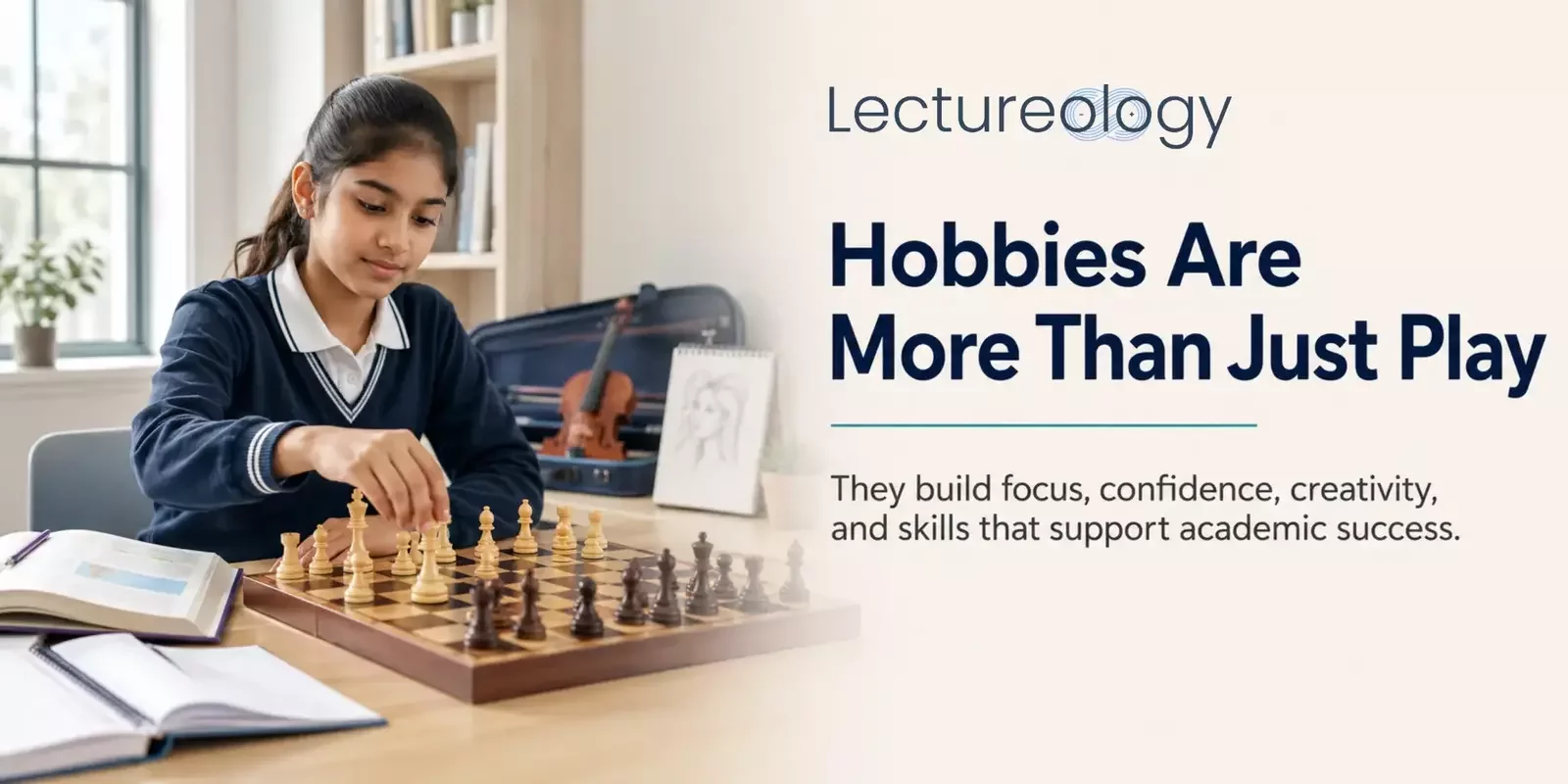
Create a Realistic Routine
One of the best ways to balance academics and hobbies is by creating a structured but flexible routine.
Children benefit from having:
Dedicated study time
Time for hobbies and relaxation
Breaks between activities
Consistent sleep schedules
A routine helps children understand that both academics and hobbies are important parts of daily life.
However, schedules should remain realistic. Overloading children with back-to-back classes and activities can lead to exhaustion rather than productivity.
The goal is balance, not constant busyness.Avoid Comparing Your Child to Others
Parents often feel pressure when comparing their child’s academic performance or achievements with others.
But every child develops skills and confidence at a different pace.
Some children may excel academically early on, while others may shine in communication, creativity, leadership, or problem-solving. Constant comparison can damage confidence and make children feel that their efforts are never enough.
Instead of focusing only on rankings or scores, parents should pay attention to growth, consistency, and overall wellbeing.
Encouragement usually creates better results than pressure.
Teach Time Management Early
Balancing academics and hobbies becomes much easier when children learn basic time management skills from a young age.
Simple habits like:
Completing homework before screen time
Preparing schedules
Breaking tasks into smaller goals
Managing distractions
can help children become more independent and organized.
These habits also reduce last-minute stress during exams and help children feel more in control of their responsibilities.Give Children Time to Rest
Children do not need to be productive every hour of the day.
Rest, free play, and downtime are important for mental wellbeing and creativity. Over scheduling children with constant tuition, classes, and activities can increase stress and reduce motivation over time.
A child who feels emotionally rested is often more focused and engaged academically.
Parents should remember that balance also includes giving children space to relax and simply enjoy being children.Encourage Learning Beyond Academics
Some of the most valuable life skills are developed outside traditional classroom environments.
Hobbies and extracurricular activities help children build:
Confidence
Leadership qualities
Teamwork
Creativity
Emotional resilience
Watch for Signs of Burnout
Children may not always express stress directly, which is why parents should pay attention to behavioral changes.
Signs of burnout can include:
Irritability
Lack of motivation
Difficulty concentrating
Frequent tiredness
Anxiety around studies
Loss of interest in hobbies
When children feel overwhelmed, reducing pressure and offering emotional support becomes more important than pushing for performance.
Healthy learning environments encourage progress without fear.Final Thoughts
Balancing academics and hobbies is not about choosing one over the other. It is about helping children grow into confident, curious, and emotionally healthy individuals.
Strong academic habits are important, but so are creativity, confidence, communication, and personal interests.
When parents support both academics and hobbies in a balanced way, children are more likely to enjoy learning, manage stress better, and develop skills that benefit them far beyond school.
With the right guidance, routines, and encouragement, children can succeed academically while still having the freedom to explore who they are.